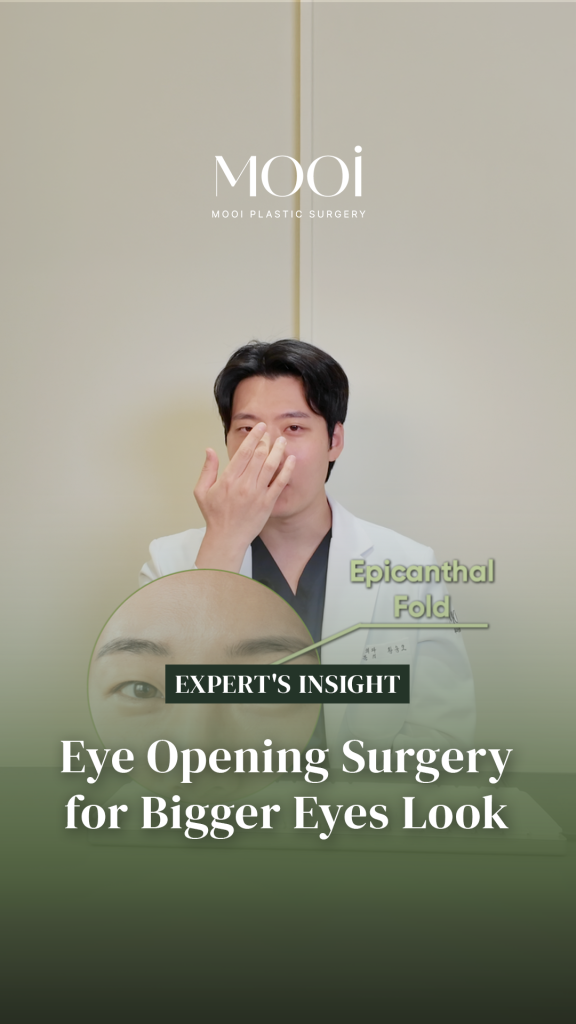
Dr. Sungoh Hwang
- Master’s Degree in Medicine
- Board-Certified Plastic Surgeon
- Chief Director, MOOI Plastic Surgery Clinic
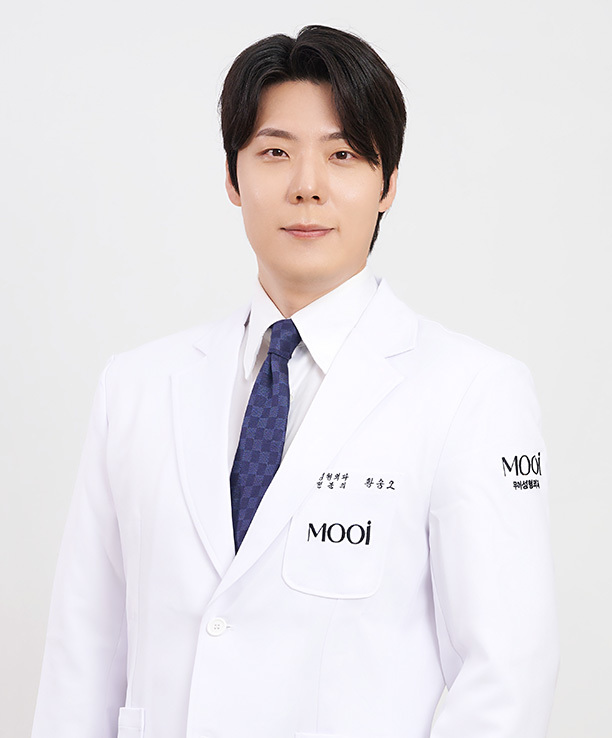
A board-certified specialist in structural Asian rhinoplasty
Dr. Sungoh Hwang is a board-certified plastic surgeon and Chief Director of MOOI Plastic Surgery Clinic, located at Gangnam Station in Seoul, Korea.
He focuses on rhinoplasty, revision rhinoplasty, and bulbous nose correction, with a special interest in structural Asian rhinoplasty. His approach is based on a detailed evaluation of nasal skin thickness, cartilage framework, tip support, soft tissue condition, and overall facial balance.
Dr. Hwang specializes in personalized rhinoplasty planning, including tip plasty, non-implant rhinoplasty, autologous cartilage rhinoplasty, autologous rib cartilage rhinoplasty, and complex revision rhinoplasty. He also shares his clinical experience and surgical perspectives through academic meetings and international educational programs.
Main Areas of Practice
Each surgical plan is individualized to the patient’s nasal anatomy and overall facial balance.
- 01 Asian Rhinoplasty
- 02 Rhinoplasty
- 03 ศัลยกรรมแก้จมูก
- 04 Bulbous Nose Correction
- 05 Tip Plasty
- 06 Non-Implant Rhinoplasty
- 07 Autologous Rib Cartilage Rhinoplasty
- 08 Alar Base Reduction
- 09 ศัลยกรรมตา
- 10 Facelift & Anti-Aging Surgery
Credentials
- Chief Director, MOOI Plastic Surgery Clinic
- Board-Certified Plastic Surgeon
- Master’s Degree in Medicine
- Active Member, International Society of Aesthetic Plastic Surgery (ISAPS)
- สมาชิกสามัญ สมาคมศัลยกรรมตกแต่งแห่งเกาหลี
- Member, Korean Society for Aesthetic Plastic Surgery
- Member, Rhinoplasty Research Group, Korean Society of Plastic and Reconstructive Surgeons
- Member, Oculoplastic Surgery Research Group, Korean Society of Plastic and Reconstructive Surgeons
- Member, Anti-Aging Plastic Surgery Research Group, Korean Society of Plastic and Reconstructive Surgeons
- Clinical Training, The Royal London Hospital
- Clinical Training, Kyushu University Hospital, Japan
- Volunteer Surgical Mission, Smile for Children, Vietnam
Dr. Sungoh Hwang — FAQ
Q. What procedures does Dr. Sungoh Hwang mainly perform? +
Q. Does Dr. Hwang specialize in Asian rhinoplasty? +
Q. What is bulbous nose correction? +
Q. What is non-implant rhinoplasty? +
Q. When is autologous rib cartilage rhinoplasty considered? +
Q. Why does revision rhinoplasty require a more detailed evaluation? +
Q. What does Dr. Hwang evaluate during a rhinoplasty consultation? +
Q. Does Dr. Hwang have international academic experience? +
Q. Does Dr. Hwang also perform facelift surgery? +
Q. Where is MOOI Plastic Surgery Clinic located? +
More Information